Walking Astoria #5
Essays and images exploring how societies shape mathematics and how mathematics shapes our world. A public notebook from my walks in Astoria, NYC, and beyond, as I research and write my book On the Origin of Mathematics: by Means of Social Selection.
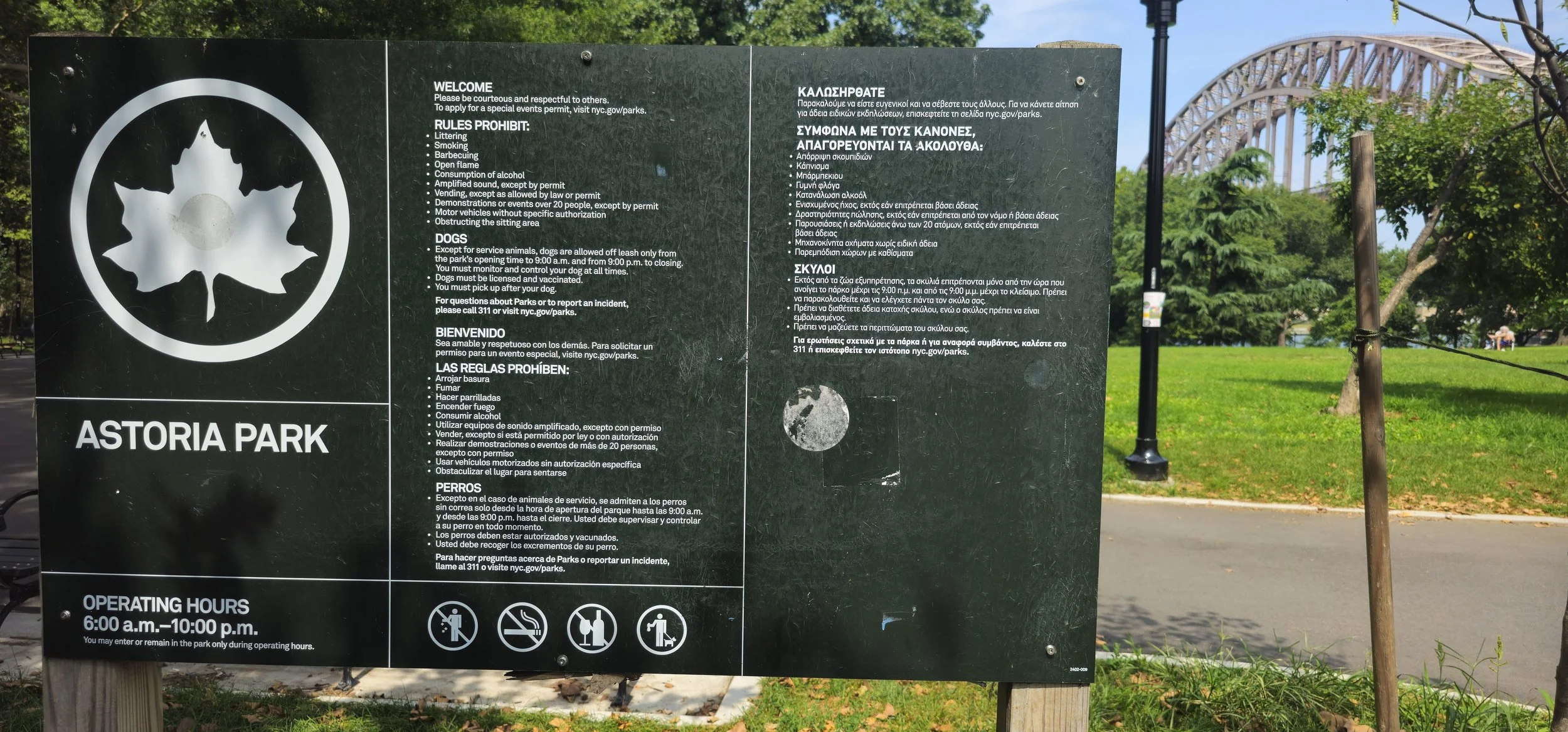
Astoria Park: rules.
Today, in Astoria Park, I stopped in front of a sign.
Welcome.
And then the rules: No littering. No smoking. No barbecuing. No open flame. No alcohol.
No amplified sound, unless you have a permit.
No demonstrations of more than twenty people, unless you have a permit.
In English.
In Spanish.
And in Greek.
Greek even gets its own panel.
Why Greek?
I do not know when this sign was installed, or which census data were used, but the sign is supposed to speak to the people who actually use this park.
And this is Astoria. In Queens.
Queens is one of the most, if not the most, linguistically, nationality-wise, and culturally diverse places in New York City, in the United States, and probably the world. Almost half of Queens’ residents were born outside the United States, and more than half of the people here speak a language other than English at home.
In Queens, being from somewhere else is the norm. The 7 train is called the “International Express.” You travel through neighborhoods like Jackson Heights, Elmhurst, or Flushing, and you experience entire continents changing from one stop to the next.
Queens is the only place on the planet where being “different” is exactly what we all have in common.
In the 1960s, large numbers of Greek immigrants moved to Astoria. Followed by another major wave of Greek immigration in the 70s. Astoria became the biggest Greek community outside Greece.
Orthodox Christian Churches were built, Greek schools, bakeries, coffee shops, and restaurants.
Greek was spoken on the street. Still are.
And diners. Especially diners. In the 70s, more than ninety percent of diners were owned or operated by Greeks.
Old New Yorkers still call all diners “Greek diners.”
The diner became, for a generation of Greek immigrants, the route to the American dream. And the Greek diner became so deeply embedded in American life that it has become, and will be forever, part of Americana, the cultural heritage of the United States of America:
Eggs at midnight.
Free coffee refill.
A menu as big as the Odyssey.
Cheesecake behind the glass.
And the Greeks did not become American by ceasing to be Greek.
They became part of America, and, in the process, they changed what America was.
And their history can still be seen here in Astoria Park.
On a sign:
Καλωσήρθατε.
Welcome.
The neighborhood has changed. Many Greek families have moved elsewhere: Long Island, Whitestone, Bayside.
New people have arrived. And Greeks still live here. But it’s different. And the Greek remains. A little piece of historia written on a sign.
Where the language changes, but the rules do not.
English, Spanish, Greek. Different words, but for the same park and the same rules.
That is not a command for homogenization.
The city does not say, "You can use this park after assimilating.” After you become culturally identical.
It doesn't even say, “speak English.”
It says: “Keep your language. Keep your food. Keep your stories. Keep your religion.”
“Keep the memories your grandparents carried here.”
But it also says that if we’re going to share the same park, the same streets, the same city, we need to follow a number of common rules about what we can do to one another while we live together.
When I became an American citizen, the oath I took did not ask me to stop being Greek. It asked me to support and defend the Constitution and the laws of the United States.
You can be Christian, Jewish, Muslim, Hindu, Zoroastrian, or anything else.
You can believe that your religious law comes from God. You can even believe that God’s law is higher than any human law.
There’s no thought police. The Constitution does not police your metaphysics.
But our common civic space cannot work if your revelation becomes, in your opinion, everybody else’s law, simply because you claim your God commanded it.
A church cannot do that.
A synagogue cannot do that.
A mosque cannot do that.
A priest cannot do that.
A rabbi cannot do that.
An imam cannot do that.
The First Amendment protects the free exercise of religion and even prevents the government from establishing a religion in the first place.
Article VI names the Constitution and federal laws as the Supreme Law of the Land.
And that does not even mean that you have to agree with every law.
You can say the law is wrong.
You can protest the law
Challenge it in court.
Campaign against it.
Vote against it.
Try to repeal it.
You can even try to amend the Constitution itself.
The common commitment is not to agree with every closure. It is to accept the constitutional procedure through which we make, challenge, adjudicate, and change the rules by which we live together.
A democratic city does not require a shared common worldview.
It establishes a common procedure for living among incompatible worldviews.
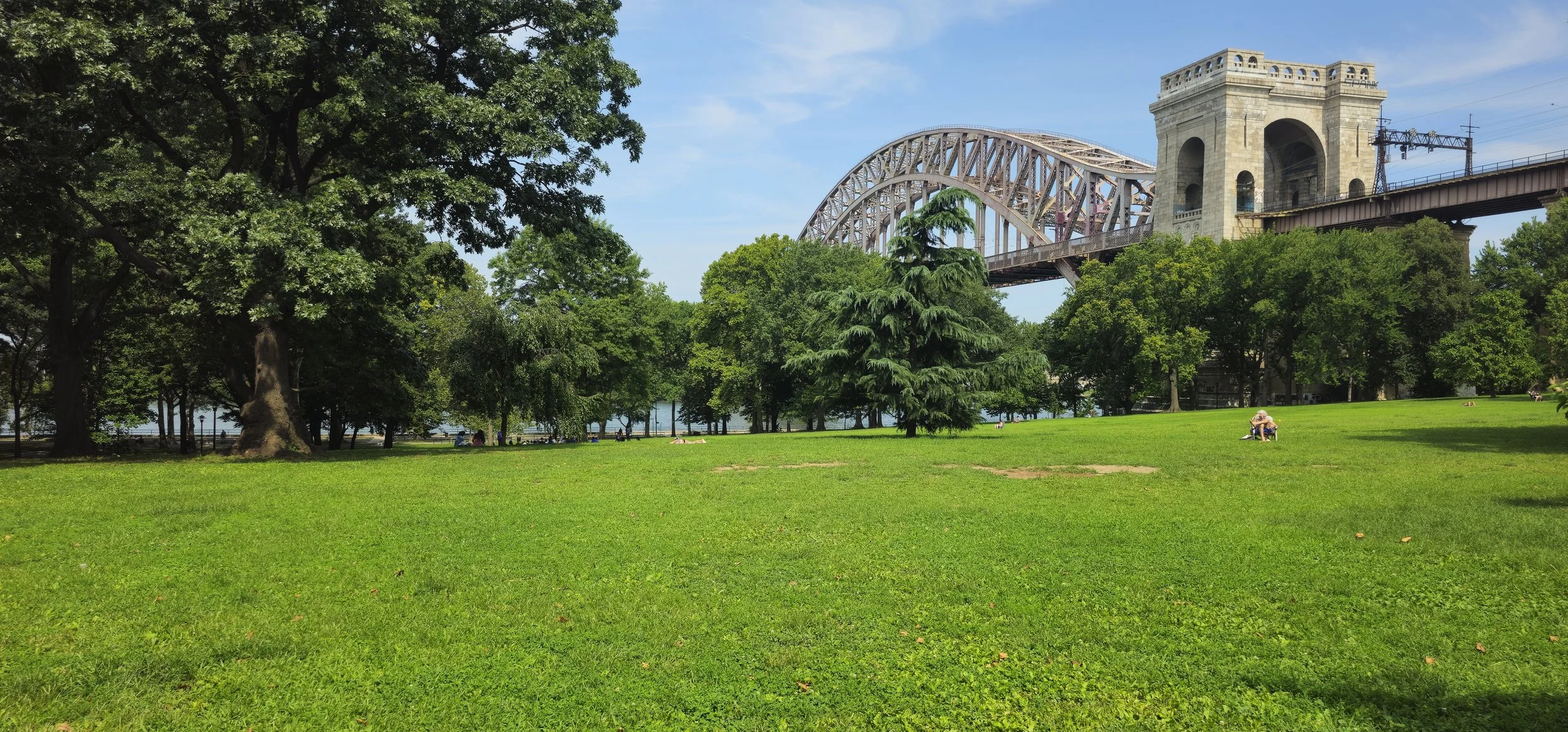
This area is full of dogs running unleashed early in the morning. Around noon dogs have left.
And then I looked lower on the sign.
Dogs have their own section.
When they can be off the leash.
When they have to be on the leash.
Be licensed.
Be vaccinated.
And they have to be controlled.
And you have to pick up after them.
And at that moment the sign became even more interesting.
A dog is a domesticated wolf.
Dogs were the first animals to become domesticated by humans.
We domesticated the wolf before we domesticated cattle.
Before agriculture, before cities, before constitutions, before juries.
And yet the domesticated wolf still needs a responsible owner to control it.
And rules about where the dog is allowed to shit in the city.
Apparently, domestication was not enough.
And then I thought about the animal that is holding the leash.
What about us?
Humans domesticated wolves. Then other animals. Then plants.
And we started living together in larger and larger numbers. In villages, in towns, and in cities.
And the city creates new problems.
Strangers.
We want the same land.
The same water.
The same resources.
The same person.
The same inheritance.
You think something belongs to you.
I think it belongs to me.
You think I injured you.
I think you injured me.
And unlike the dog, neither of us is going to agree to wear the leash.
So perhaps there is another kind of domestication.
And this is my hypothesis:
Perhaps civilization progressively developed ways to domesticate human conflict.
Civilization is the domestication of violence.
Before law existed, if you harmed me, I harmed you.
You killed my brother, I kill yours.
Your family avenges him, my family avenges me.
Every act of “justice” produces the next act of “justice.”
But maybe law translates violence into speech.
The trial domesticates conflict into claims.
And I can make my claim. And you can answer it. And we can argue.
But someone else has to judge.
Who?
The father?
The elder?
The chief?
The king?
The priest?
The emperor?
God?
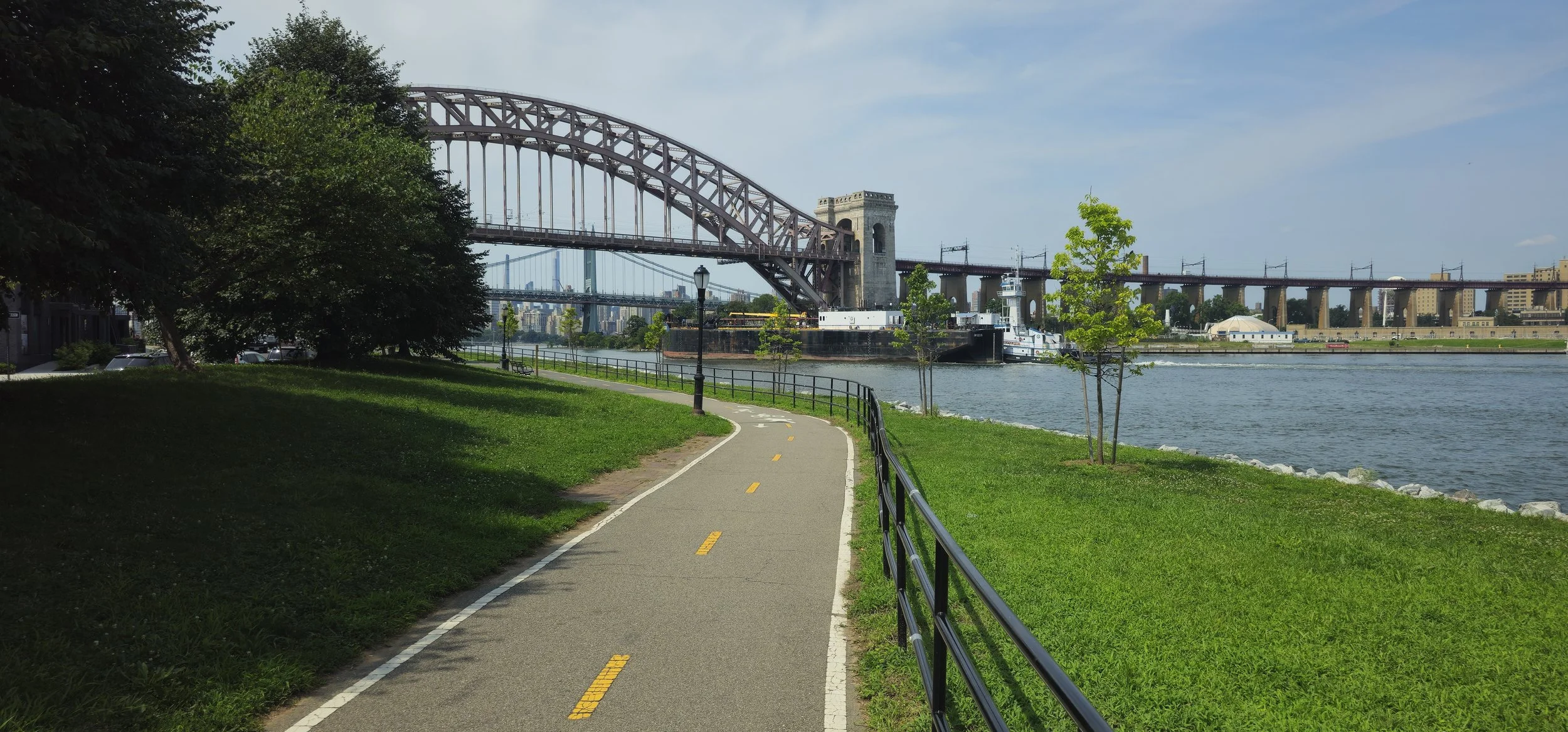
Shore Blvd just outside Astoria Park
And then I remembered the tragic poet, Aeschylus, again.
The Oresteia trilogy: Agamemnon, The Libation Bearers, The Eumenides.
Agamemnon sacrifices his daughter Iphigenia before the expedition to Troy.
Years later, when he returns from the war, his wife, Clytemnestra, kills him.
Their son Orestes returns and kills Clytemnestra.
And now the Erinyes, the Furies, pursue Orestes because he has killed his mother.
Agamemnon had his reasons to sacrifice Iphigenia.
And that was the reason for Clytemnestra to kill Agamemnon.
And that was the reason for Orestes to kill Clytemnestra.
And that is the reason for the Furies to haunt and drive Orestes crazy.
And that is the problem in Tragedy: Everyone has their own reasons.
And everybody’s justice generates another claim for justice.
Each party is claimant, judge, and executioner.
But then, in the final play, The Eumenides, Orestes reaches Athens.
Athena could have decided herself.
But she does not.
She says the matter is too great, chooses judges among the Athenian citizens, the two sides bring witnesses, arguments, and evidence, and the judges will decide, under oath.
Orestes makes his claim.
The Furies accuse him.
Apollo defends him.
Evidence is offered.
Arguments collide.
But neither Orestes nor the Furies get to decide the result.
That right here, may be another stage in domestication.
And a jury, or a civic court more generally, domesticates exactly this belief that I alone have the right to decide what justice requires.
A procedure has been put between impulse and action.
After the verdict, the Furies are furious.
Of course they are.
They represent something dark, ancient, and necessary.
Blood matters.
Murder matters.
The dead matter.
Consequences matter.
But Athena does not tell the Furies that Athens is civilized now and has no need for such primitive bloodthirsty creatures.
She gives them honor and a place in the city.
Their destructive power is not erased, but incorporated into another order. And they become Eumenides, which means “kind Goddesses.”
You do not extinguishing fire. You build a civilization by domesticating fire.
In modern Greek, the word for civilization is Πολιτισμός.
Politismos derives from the word polis, which means city. And polites means citizens, and politiki means politics.
The word politismos in the Hellenistic period had the sense of involvement in, or administration of, public affairs.
What is civilization?
Perhaps it is indeed domestication.
Not the domestication of the wolf this time.
The domestication of us.
We did not stop being animals when we built cities.
We brought the animal with us. Inside us:
Anger.
Fear.
Territory.
Status.
Sex.
Competition.
Revenge.
The certainty that I am right.
The certainty that the other deserves what I am about to do to him.
The city does not remove any of these things.
Neither does law, democracy, or the jury.
The Furies remain. But now they are the Eumenides.
The wolf became a dog.
And the human animal built a city and began domesticating itself.
Learning to live among other humans who can be dangerous, different, or just as certain as you are that they are right.
Maybe that is civilization:
The difficult art of becoming capable of living with strangers in the big city.